
Can You Use 4H on Wet Bitumen? Why It Depends on Your 4WD
Posted in Motoring Tips
Can You Use 4H on Wet Bitumen? Why It Depends on Your 4WD
A Brisbane storm starts hammering down halfway home. Grip feels less predictable and there is a 4H position beside you. Should you select it?
Sometimes - but rain alone is not enough to decide.
Some 4WDs have a full-time 4H or automatic mode designed for sealed roads. In others, 4H locks the front and rear driveline together for loose or consistently low-grip surfaces. The right setting depends on your vehicle's exact system.
So, Can You Use 4H on Wet Bitumen?
Only use 4H on wet bitumen when the owner's manual identifies that exact mode as suitable for sealed-road driving.
In a traditional part-time system, wet bitumen is not automatically a reason to engage 4H. The correct setting may still be 2H. A road-compatible 4A, Auto or full-time mode may be the better option if the vehicle has one.
Wet bitumen can still provide plenty of grip. Your owner's manual - not a generic 4WD rule - has the final say.
Why Can Part-Time 4H Cause Problems on Bitumen?
When a vehicle turns, its front and rear wheels follow slightly different paths and need to rotate at slightly different average speeds.
A full-time system can manage that difference through a centre differential or controlled clutch. A traditional part-time 4H system couples the front and rear driveline more directly.
On dirt, gravel, sand or mud, slight tyre slip can release the difference. On high-grip bitumen, tension may instead build through the tyres and driveline. This is known as driveline wind-up.
Signs can include tight steering, tyre scrubbing or hopping, extra noise, difficulty leaving 4H, or a vehicle that resists the turn. Return to the correct road mode in line with the owner's manual rather than continuing to drive and hoping it clears.
For example, Ford's owner guidance similarly warns that using locked 4H or 4L on hard, high-grip roads can increase noise and tyre wear and potentially damage driveline components.
When Is a Four-Wheel-Drive Mode Designed for Sealed Roads?
A road-compatible setting may be called 4H, 4A, Auto or something else. The letters alone do not tell you how it works.
Mitsubishi Super Select 4WD-II
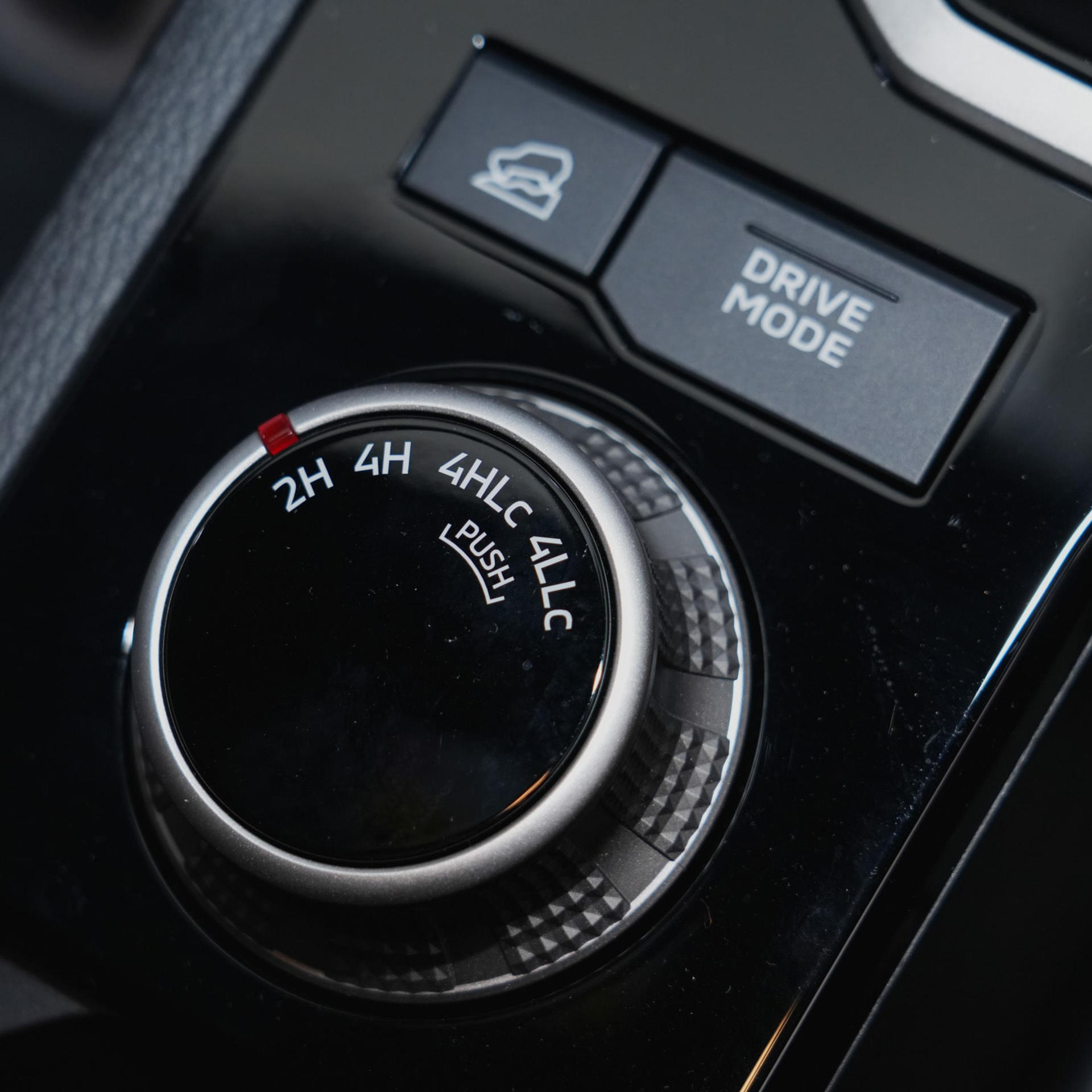
In Mitsubishi's Super Select 4WD-II system, 4H is a full-time setting with an open centre differential. Mitsubishi describes it as suitable when extra control is needed on bitumen and for improved stability on wet surfaces.
Its locked modes are labelled separately: 4HLc locks the centre differential, while 4LLc also adds low-range gearing.
However, some Triton grades use Easy Select 4WD instead. In that system, 4H is intended for rugged or low-grip conditions. Saying "I drive a Triton" is not enough to determine the right setting - the current Triton range includes different 4WD systems depending on the grade.
Ford 4A
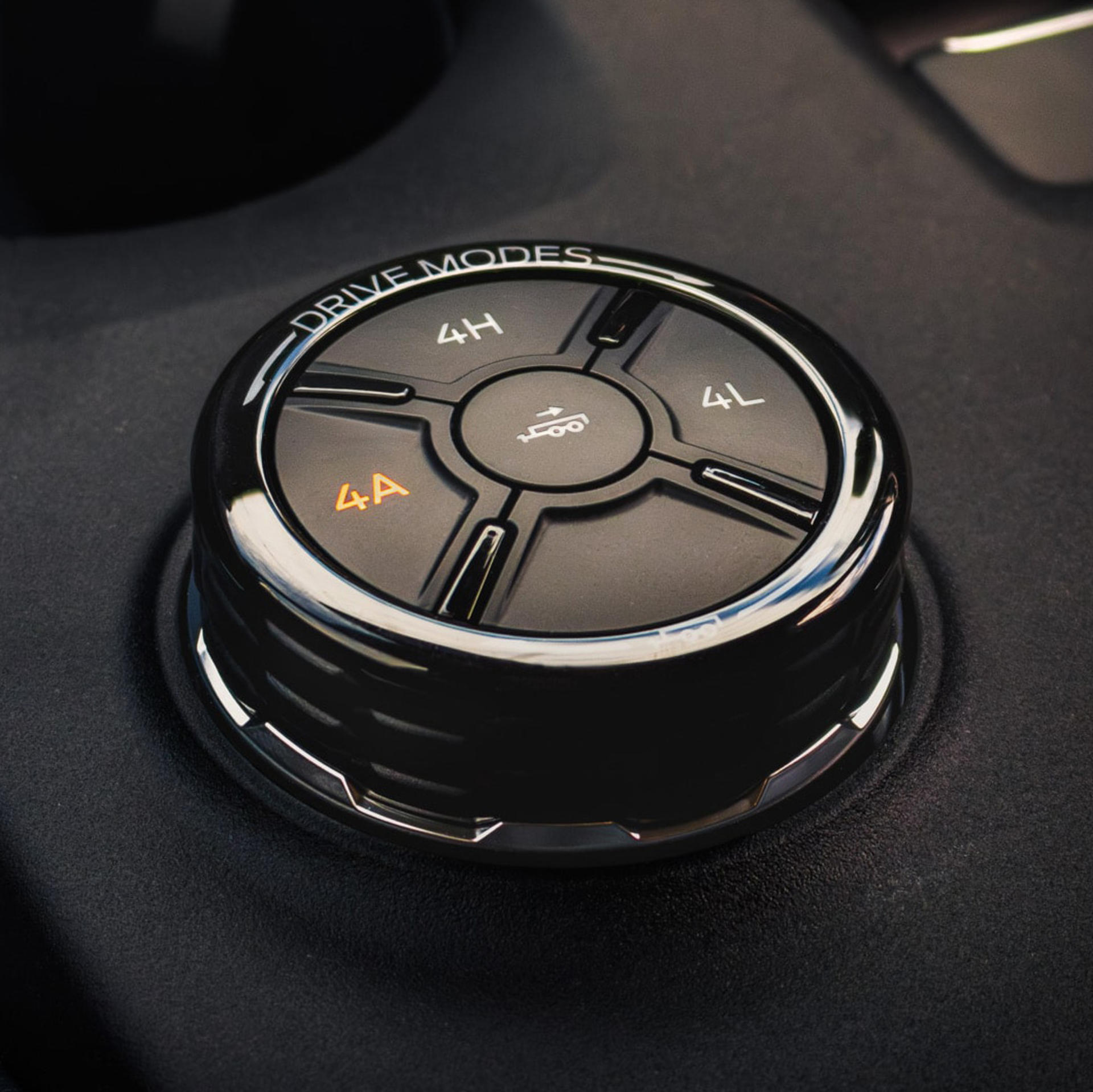
Ford's 4A can vary drive to the front and rear wheels as required, making it suitable for changing on-road conditions. Ford's 4H supplies locked four-wheel-drive power for sand, mud and other off-road or very low-grip surfaces.
Ranger and Everest systems can vary by model year, engine and grade, so two vehicles with the same model name may require different settings. Ford's current Australian ranges include both part-time 4x4 and full-time 4WD configurations.
The key point is simple: 4H is only a label. What happens mechanically matters more than the letters beside the dial.
How Can You Tell Which System Your 4WD Has?
Check the year, model, grade and drivetrain, then read the four-wheel-drive section of the owner's manual. Look at every selector position and identify the mode recommended for sealed-road driving.
| What the selector shows | What it may indicate | What to confirm |
|---|---|---|
| 2H / 4H / 4L | Often a part-time system | Whether 4H is limited to loose or low-grip surfaces |
| 2H / 4A / 4H / 4L | A road mode plus locked off-road modes | Whether 4A is recommended for wet roads |
| 2H / 4H / 4HLc / 4LLc | Full-time 4H plus locked modes | Whether 4H is approved for sealed roads |
| AWD or Auto AWD | Drive may be managed automatically | Whether the driver needs to select anything |
These are common patterns, not universal rules. Do not rely only on the model badge, a previous owner or an online comment.
Is Selecting 4H the Most Important Wet-Weather Decision?
No drivetrain setting replaces driving to the conditions.
In Queensland rain, slow down, increase your following distance, and accelerate, brake and steer smoothly. Keep your tyres in good condition, avoid cruise control when aquaplaning is a risk and never drive onto a road covered by floodwater.
Queensland guidance recommends at least a four-second gap in wet weather, compared with at least two seconds in good conditions.
Four-wheel drive may help put power to the road, but it cannot restore worn tyre tread, clear standing water or make a flooded crossing safe.
What If You Are Still Unsure?
Check the manual for your exact year and variant, or ask a qualified technician or experienced 4WD trainer. Heavy rain is not the place to test an unfamiliar locked mode.

Get to Know What Your 4WD Can Really Do
Knowing which setting to use is one thing. Understanding how your 4WD responds on dirt, gravel, hills and changing surfaces is much easier with practical guidance.
Motorama 4x4xMORE tag-along tours help drivers build confidence, learn more about their vehicle and explore South East Queensland with experienced support and a community of other 4WD owners.
If you bought your 4WD from Motorama or regularly service it with us, explore Motorama 4x4xMORE and see how you can get involved.


