MOTORAMA PRE-OWNED
Know the exact system before you buy
Browse Motorama Pre-Owned 4WDs and speak with the team about the variants on your shortlist. Ask which mode belongs on bitumen, whether low range is fitted and what the service records show.


Posted in Buyer Advice
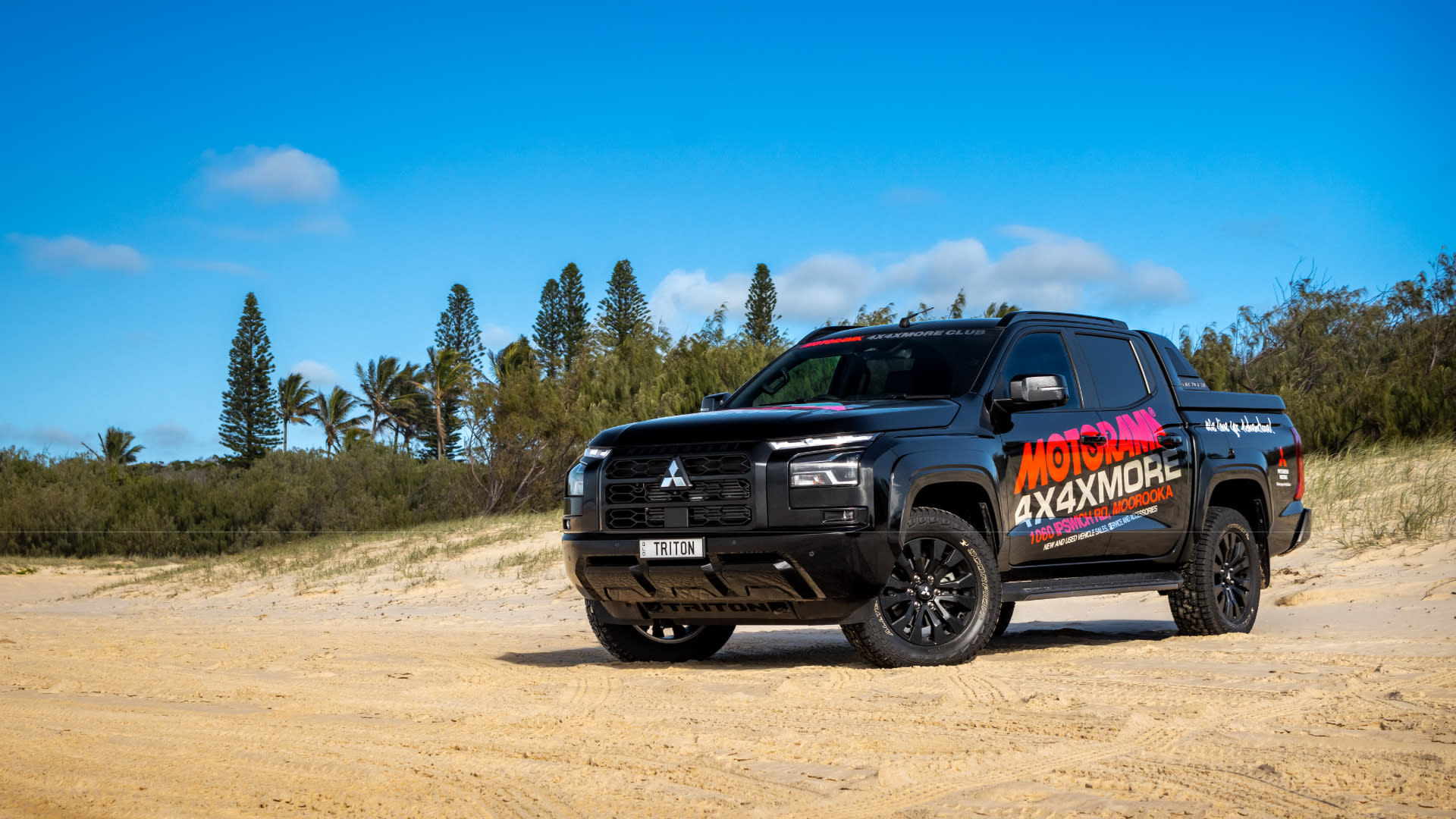
A wet drive across Brisbane, a gravel road into a campground and a slow, rocky track can all feature in one weekend. But the right four-wheel-drive setting may be different for each-and for each vehicle.
A 4WD or AWD badge doesn't tell you enough. The system can change with the model year, engine, transmission and grade, even within the same model range.
Broadly, part-time 4WD commonly uses two-wheel drive on sealed roads. Full-time 4WD includes a road-compatible four-wheel-drive mode. AWD generally manages drive automatically, but its hardware varies widely.
The useful questions are: which setting belongs on bitumen, is there low range, and what do you need to select? Start with the exact vehicle's owner manual, not a rule borrowed from another brand.
A typical part-time system has 2H, 4H and 4L on its selector.
In 2H, the vehicle commonly drives its rear wheels for everyday sealed-road use. Selecting 4H couples front and rear drive in a locked relationship, intended for loose surfaces such as gravel, dirt, sand or mud.
4L adds low-range gearing for slower, more demanding terrain. It is about controlled progress, not travelling faster.
For the normal bitumen commute, 2H is generally the appropriate setting. Selecting locked 4H doesn't turn the vehicle into a full-time system: it changes how the axles are connected. On high-grip surfaces, that can create driveline wind-up-mechanical strain caused by the system being unable to accommodate differences in axle speed.
Full-time 4WD includes a mode that can remain selected on sealed roads. A centre differential or managed coupling allows the system to accommodate different front- and rear-axle speeds.
It may also offer two-wheel drive, locked modes and low range. The label doesn't mean the axles are permanently locked together or that every system uses the same torque split.
Ford 4A on equipped vehicles and Mitsubishi Super Select 4H are two examples of road-compatible four-wheel-drive settings. Their other modes work differently, which is why the selector labels need to be read in context.
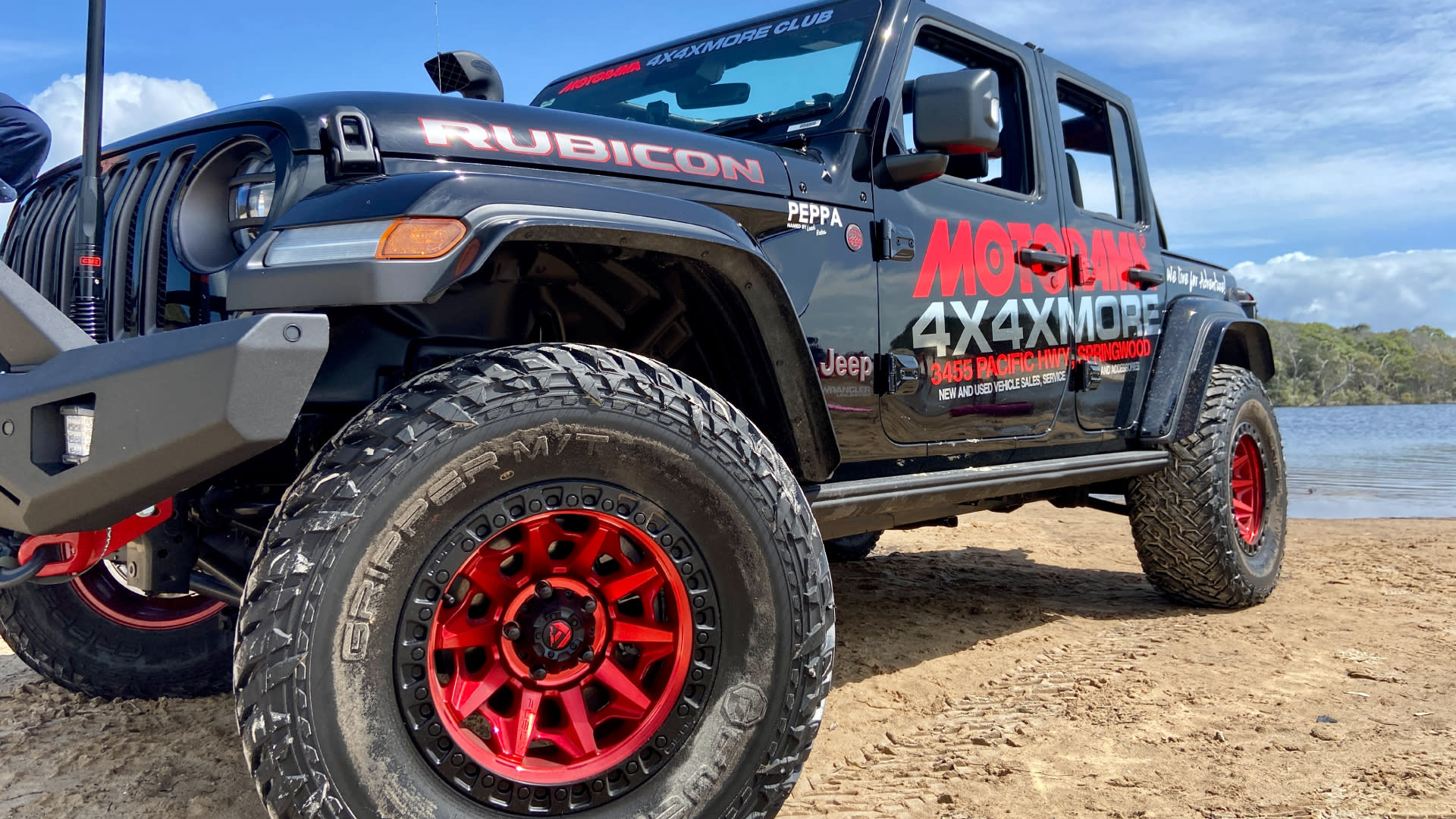
AWD means all four wheels can receive drive, rather than describing one mechanical layout.
Some systems drive both axles continuously; others bring another axle into play as needed. Electric vehicles may use separate motors. Subaru's Symmetrical AWD is one example of a full-time approach, not a template for every AWD vehicle.
Many AWD vehicles have neither low range nor a driver-selectable centre differential lock. An AWD SUV may suit commuting and maintained gravel roads, but that badge doesn't establish its suitability for rough South East Queensland tracks.
Check ground clearance, tyres and low-speed gearing separately. Drive to four wheels is only one part of off-road capability.

When a vehicle turns, its front and rear axles follow different paths and need different average rotational speeds.
A road-compatible system allows that difference. A locked part-time arrangement cannot freely accommodate it and relies on some tyre slip on loose ground to release the strain. On high-grip bitumen, that strain can build up instead.
Around a corner, the front and rear axles cover different distances. They need different average rotational speeds. How the system handles that difference determines which modes suit bitumen.
Allows the axle speeds to differ.
A centre differential or managed coupling accommodates the difference, so this mode can remain selected on sealed roads.
Relies on tyre slip on loose ground.
Front and rear drive are coupled in a locked relationship. Tyre slip on suitable loose ground relieves the strain. On high-grip bitumen, it can build up as driveline wind-up.
Check the mode, not just the weather.
Rain alone is not a reason to select locked 4H on a Brisbane road. Check which mode your exact vehicle's owner manual permits on sealed surfaces—the selector label alone is not enough.
Rain isn't a shortcut around this distinction. On a wet Brisbane road, check whether the manufacturer permits the selected mode on sealed surfaces, rather than assuming rain makes locked 4H appropriate.
The handbook for your exact vehicle decides, not the weather alone.
No. They do different jobs, even when the controls sit beside each other.
A driveline setting determines how the front and rear axles are driven or connected.
A terrain mode changes settings such as accelerator response, gear selection, traction control and braking. A Mud button doesn't prove the vehicle has low range or a lockable centre differential.
A differential lock changes which components can rotate at different speeds. A rear locker links the two rear wheels; a centre lock links front and rear drive.
Hill-descent and crawl controls are further assistance features. These systems may work together, but their names are not interchangeable.
Use the listing as a starting point, then check the vehicle itself:
Knowing the model name is useful. Knowing the exact system is what makes the advice usable.
Identifying the system doesn't tell you whether it has been maintained or works correctly.
Mode checks must follow the handbook and use a suitable surface. Don't test locked 4H by driving tight circles on dry bitumen. For an existing vehicle with unclear servicing needs, speak with Motorama Tyre & Service.
Start with your actual week, not which badge sounds most capable.
Part-time 4WD can suit work and off-road use where the driver selects the appropriate loose-surface modes. Full-time 4WD can suit mixed sealed and unsealed driving, with low range where fitted. AWD can suit everyday driving and mixed surfaces, but capability varies considerably.
There is no universal winner. Tyres, clearance, gearing, cooling and driver experience still matter.