Loaded trailer mass
2,700kg + 280kg = 2,980kg
- 220kg below the trailer’s 3,200kg ATM rating.
- 520kg below the vehicle and towbar’s 3,500kg trailer limit.

Posted in Motoring Tips
Seeing 3,500kg braked towing capacity in a brochure can make towing look like a simple numbers exercise. In practice, that figure is only one ceiling.
Once you add a towbar, bull bar, canopy, drawers, passengers, luggage, fuel and the trailer’s towball download, the vehicle may reach its GVM, rear-axle limit or GCM before the trailer reaches the advertised towing figure.
That applies whether you are towing a caravan out of Brisbane, taking a boat towards Moreton Bay or pulling a loaded box trailer across Logan. The important question is not only, “What is this vehicle rated to tow?” It is, “What is the lowest remaining limit when this exact vehicle and trailer are loaded for the trip?”
Queensland requires the loaded vehicle, trailer, individual axles, tyres, coupling and complete combination to remain within their applicable limits. The driver is responsible for making sure the vehicle, trailer and connection are suitable and safely loaded.
Your usable towing capacity is the lowest limit created by:
A trailer can therefore be below the vehicle’s advertised towing capacity but still make the vehicle overweight.
Manufacturer towing calculators also warn that published weights are only a starting point. Exact vehicle weight varies with options, accessories and load, so the final combination should be weighed rather than calculated from brochure figures alone.
Towing capacity cannot be confirmed from one number alone. These ratings work together, and the lowest applicable limit determines how the vehicle and trailer can be loaded.
| Term | What it means | Why it matters |
|---|---|---|
| Kerb mass | The vehicle’s published base mass under the conditions stated by its manufacturer. The treatment of fuel, options and accessories can vary, so check the specification for the exact vehicle. | It is commonly used to calculate advertised payload, but it may not represent what the vehicle weighs after accessories have been fitted. |
| Payload | On paper, payload is generally the vehicle’s GVM minus its kerb mass. In real use, it includes people, luggage, accessories, cargo and towball download. | Every kilogram added to the vehicle reduces the remaining capacity before it reaches its GVM or an axle limit. |
| GVM Gross Vehicle Mass | The maximum permitted loaded mass of the tow vehicle. | The vehicle, passengers, fuel, cargo, accessories and towball download must remain below this figure. |
| GCM Gross Combination Mass | The maximum permitted mass of the loaded tow vehicle and loaded trailer together. | It may prevent the vehicle from using its maximum payload and maximum towing rating at the same time. |
| ATM Aggregate Trailer Mass | The trailer’s maximum permitted loaded mass, including the load it imposes on the tow vehicle through the coupling. | The trailer’s complete loaded mass must remain below its ATM rating. |
| GTM Gross Trailer Mass | The maximum mass transmitted to the ground through the trailer’s wheels and axles while the trailer is coupled to the tow vehicle. | GTM excludes the portion of the trailer’s load being supported through the towball. |
| Towball download | The downward load the trailer applies to the towball. It may also be called ball mass, ball weight or trailer nose weight. | It counts towards the tow vehicle’s loaded mass and can place a significant load on the rear axle. |
| Axle rating | The maximum mass permitted on an individual axle or axle group. | A vehicle can remain below its GVM while still exceeding its front- or rear-axle rating. |
| Braked towing capacity | The maximum loaded trailer mass the vehicle is rated to tow when the trailer has the required braking system. | It remains subject to GVM, GCM, axle, towbar, coupling, towball and trailer limits. |
The key point: maximum braked towing capacity is only one ceiling. Your usable capacity is controlled by the lowest applicable vehicle, trailer, axle, towbar, coupling, towball or tyre limit.
Queensland legislation defines ATM as the manufacturer-specified maximum loaded trailer mass, including the mass imposed on the tow vehicle. It defines GTM as the mass transmitted to the ground through the trailer’s axles when coupled.
Current manufacturer guidance also confirms that towball download uses vehicle payload.
Do not rely on a generic figure for a model name such as “HiLux”, “Ranger” or “Triton”. Towing and mass limits can change with the:
Find the vehicle’s GVM, GCM, braked and unbraked towing ratings, front and rear axle limits and maximum towball download. Check the owner’s manual, manufacturer specification, identification information and any applicable modification plate or certificate.
Then check the towbar placard, coupling rating and the trailer’s compliance plate.
Queensland’s current rules use the applicable manufacturer, RAV, compliance-plate or approved modification figures when determining mass limits.
The most useful starting number is not kerb mass. It is the vehicle’s actual loaded mass before the trailer is connected.
Load it as it will be used, including:
Use actual measured weights where possible. Accessory weights can vary considerably, so do not rely on a generic estimate for a canopy, bull bar, winch or long-range fuel tank.
Queensland’s definition of a vehicle load includes the driver, passengers, goods, fuel, water and readily removable equipment.
When the trailer is connected, its towball download becomes part of the tow vehicle’s loaded mass.
Coupled vehicle mass = loaded vehicle mass before coupling + actual towball download
That result must remain below the vehicle’s GVM.
You must also check the front and rear axle loads. Towball download does not simply sit evenly across the vehicle. Its position behind the rear axle can increase the rear-axle load while reducing some load on the front axle.
The trailer’s actual loaded mass consists of the load supported by its axles plus the load transferred through the towball.
Loaded trailer mass = actual trailer axle mass + actual towball download
The loaded trailer mass must remain below the lowest applicable limit, including:
The towball download must also remain below the lowest applicable ball-load limit stated for the vehicle, towbar, coupling or trailer.
Use one of these equivalent calculations:
Combination mass = loaded vehicle mass before coupling + loaded trailer mass
or:
Combination mass = coupled vehicle mass + actual trailer axle mass
Do not add the full loaded trailer mass to the vehicle’s already-coupled mass. That would count the towball download twice.
The result must remain below the vehicle’s GCM. Queensland law separately requires the loaded motor vehicle to remain below GVM, the loaded trailer to remain below ATM and the complete light combination to remain below GCM.
Passing the GVM and GCM calculations does not finish the job.
You must also confirm that:
The towbar, coupling or axle limit may be lower than the headline vehicle towing capacity. Queensland guidance describes the connection as only being as strong as its weakest link.
Enter the ratings for the exact vehicle, towbar and trailer, followed by the actual measured weights of the loaded combination.
Where more than one towball or trailer-mass limit applies, enter the lowest applicable figure.
| No. | Worksheet item | Your figure | What to enter |
|---|---|---|---|
| 1 | kg | Maximum permitted loaded mass of the tow vehicle. | |
| 2 | kg | Maximum permitted mass of the vehicle and trailer combined. | |
| 3 | kg | Vehicle rating for the exact model year, variant, body, drivetrain and transmission. | |
| 4 | kg | Maximum trailer mass shown on the towbar rating label. | |
| 5 | kg | ATM shown on the trailer compliance plate. | |
| 6 | kg | Enter the lowest applicable limit for the vehicle, towbar, coupling or trailer. | |
| 7 | kg | Actual vehicle mass with passengers, fuel, accessories, luggage and cargo before connecting the trailer. | |
| 8 | kg | Actual mass supported through the trailer’s wheels and axles while connected. | |
| 9 | kg | Actual measured downward load applied through the coupling. | |
| 10 | Loaded trailer mass Trailer axle mass + towball download | kg | The trailer’s complete actual loaded mass. |
| 11 | Coupled vehicle mass Loaded vehicle mass + towball download | kg | Vehicle mass after the trailer’s towball load is applied. |
| 12 | Combination mass Loaded vehicle mass + loaded trailer mass | kg | Total actual mass of the loaded vehicle and loaded trailer. |
These results only compare the figures entered. They do not assess individual axle, tyre or other compliance limits.
The worksheet does not assess front-axle load, rear-axle load, trailer axle limits, tyre ratings, braking requirements, coupling suitability or load distribution. A combination may remain below GVM and GCM while still exceeding another limit.
The figures below are hypothetical and are not tied to a particular vehicle. They are included to show how the calculation works.
| Vehicle GVM | 3,200kg |
|---|---|
| Vehicle GCM | 6,250kg |
| Maximum braked towing capacity | 3,500kg |
| Maximum towball download | 350kg |
| Towbar rating | 3,500kg / 350kg |
| Trailer ATM rating | 3,200kg |
| Loaded vehicle before coupling | 2,720kg |
|---|---|
| Trailer axle mass while coupled | 2,700kg |
| Actual towball download | 280kg |
2,700kg + 280kg = 2,980kg
2,720kg + 280kg = 3,000kg
2,720kg + 2,980kg = 5,700kg
350kg − 280kg = 70kg remaining
The combination remains below the headline GVM, GCM, towing, trailer and towball limits used in the example. That does not make it a complete compliance result because the front axle, rear axle, trailer axles, tyres, braking system, coupling and load distribution still require confirmation.
It also shows why the 3,500kg towing figure cannot be used on its own. Adding another 250kg of passengers or cargo to the vehicle would increase the coupled vehicle mass to 3,250kg, exceeding the 3,200kg GVM even though the overall combination would remain below GCM.
This also shows why the 3,500kg towing claim cannot be used on its own. Adding another 250kg of passengers or cargo to the vehicle would take the coupled vehicle mass to 3,250kg, exceeding the 3,200kg GVM even though the combination would still be below GCM.
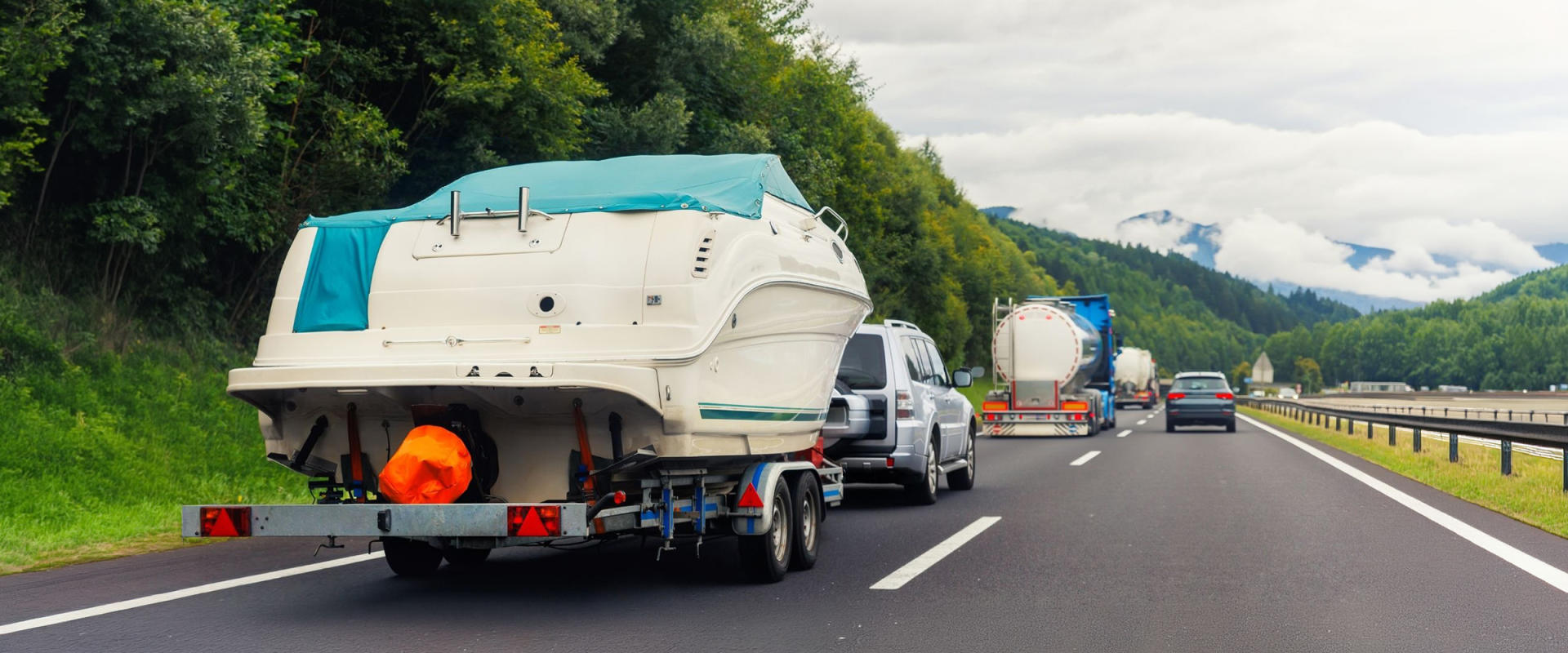
The safest way to confirm the calculation is to weigh the combination as it will actually travel. Keep the fuel, passengers, water, gas bottles, luggage and equipment consistent between measurements. Ask the weighbridge operator whether the site can provide:
These measurements allow you to calculate:
Loaded trailer mass = whole combination mass − vehicle-only mass
Towball download = loaded trailer mass − trailer axle mass
Coupled vehicle mass = whole combination mass − trailer axle mass
Repeat the check after material changes such as fitting a canopy, bull bar, drawers, batteries, roof racks or long-range tank, or adding bikes, water, tools or recovery equipment.
Queensland recommends using a public weighbridge when the loaded trailer or combined mass is uncertain. Ford’s current towing guidance likewise recommends weighing before and after accessories and loads are added rather than relying solely on approximate specification figures.
This article focuses on light vehicles and trailers. Requirements can change with the type, age and mass of the vehicle or trailer, so always check the current Queensland rules and the relevant manufacturer instructions.
Under the Queensland regulation currently in force:
The braking system required depends on the trailer's mass, design and applicable compliance requirements - not simply whether it weighs more than 750kg.
The towbar must be suitably rated for the loaded trailer. Couplings, chains, shackles and attachments must also be suitable for the trailer and correctly connected.
A weight-distribution hitch can transfer load between the vehicle’s axles and help restore ride height and steering response. It does not increase the vehicle’s GVM, GCM, towing, axle or towbar ratings, and Queensland specifically warns against using one to compensate for a badly loaded trailer.
The vehicle and trailer must be registered and roadworthy. People must not travel inside a trailer or caravan while it is being towed.
An overloaded or non-compliant towing setup may affect insurance coverage, depending on the policy and circumstances. Check your policy wording and discuss your setup with your insurer where necessary.
Queensland Government guidance notes that a trailer may not be covered by comprehensive insurance if it is overloaded, unsafe, unroadworthy, non-compliant or above the vehicle’s towing capacity. Check the policy wording and discuss the setup with the insurer where necessary.
Choosing a tow vehicle starts with the trailer you intend to use, not only the biggest towing figure in a brochure.
Bring the trailer’s ATM, expected loaded mass, measured or expected towball download and your typical passenger, accessory and cargo requirements. The Motorama team can help you compare the published GVM, GCM, towing and payload figures of the exact vehicle variants you are considering.
The final loaded combination should still be weighed and checked against its owner’s manuals, plates and applicable Queensland requirements.


