

Motorama EV Centre
Your guide to compare the real-world benefits of the latest electrified powertrains available today.
Motorama EV Centre
Your guide to compare the real-world benefits of the latest electrified powertrains available today.
Understanding Electrified Powertrains
How do they vary, and how are they powered?
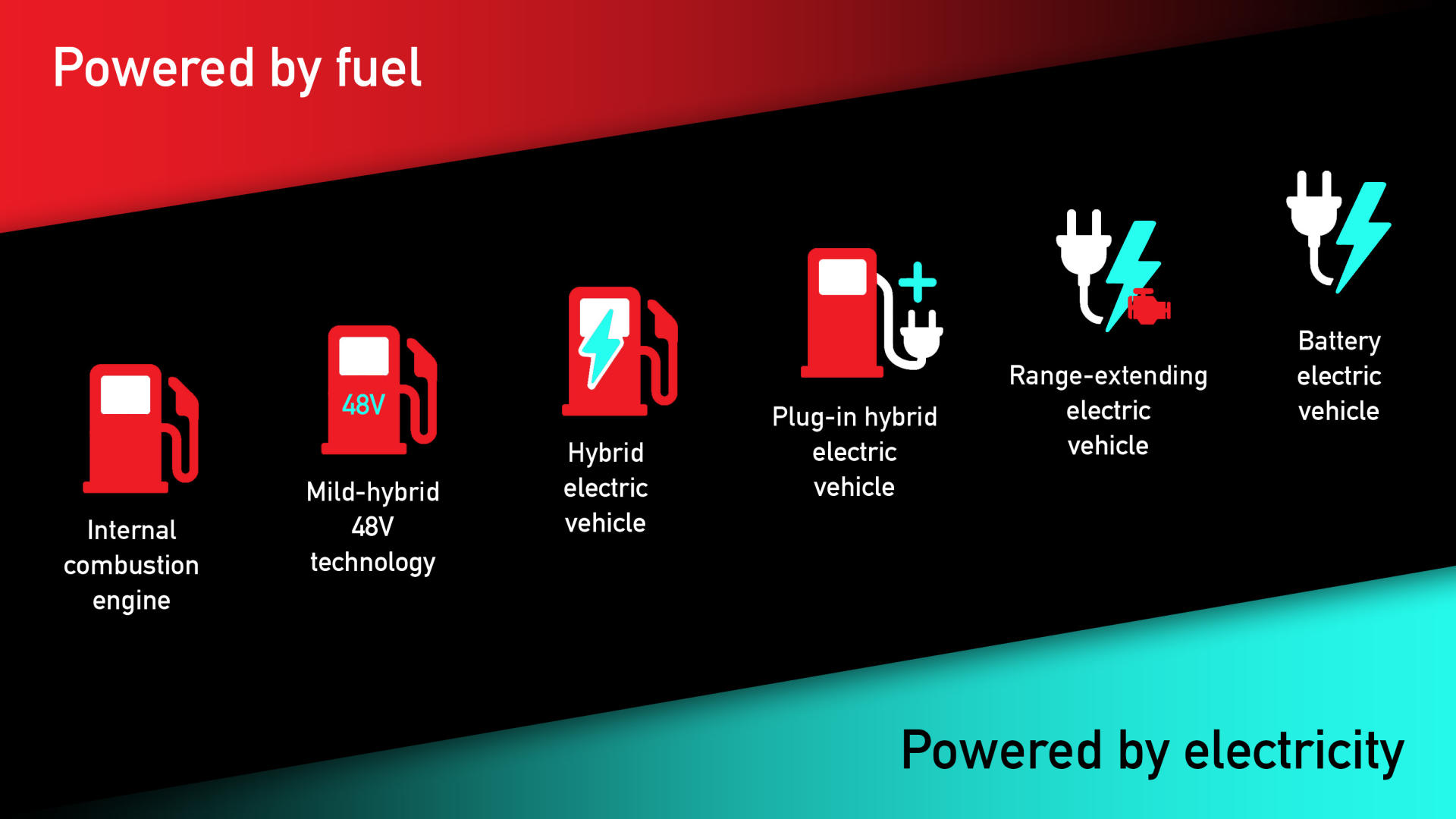
Understanding Electrified Powertrains
What are they, how do they work, and what are the benefits?

Mild-Hybrid (48V Technology)
What is it? A traditional internal combustion engine supported a 48-volt battery and electric motor.
How does it work? The motor assist with acceleration and start-stop systems but can't power the vehicle alone.
What's the benefit? Improves fuel efficiency, smooths performance and reduces emissions slightly with minimal cost or complexity.
What's charging like? No plug-in required - the battery recharges through regenerative braking and engine operation.
What's the EV range like? No EV range.

Hybrid Electric Vehicle (HEV)
What is it? An internal combustion engine supported by an electric motor and small battery to support low-speed electric driving.
How does it work? Automatically switches between engine power and electric motor based on driving input and conditions.
What's the benefit? It is especially efficient in start-stop traffic providing significant fuel savinngs around town.
What's charging like? Recharges via regenerative braking and the engine - no plug-in required.
What's the typical EV range? Very minimal - 1 to 3 kilometres.

Plug-in Hybrid Electric Vehicle (PHEV)
What is it? An internal combustion engine paired with a larger battery that lets you drive short distances on electricity alone.
How does it work? Delivers 40 to 80 kilometres of electric-only range before the engine takes over, then runs like a normal HEV.
What's the benefit? Great for short commutes and errands using electric power, with engine backup for longer road trips.
What's charging like? Must be plugged in to make the most of the EV range but can also be used like a HEV if not plugged in.
What's the typical EV range? Good enough to cover most daily commutes - 40 to 80 kilometres.

Range-extending Electric Vehicle (REEV)
What is it? A battery-electric vehicle that drives only on electric power with a small combustion engine acting purely as a generator.
How does it work? The electric motor always powers the wheen - the combustion engine does not. The engine only kicks in to recharge the battery on the go.
What's the benefit? Full EV feel with safety net range, that's ideal for driver who want electric but can't always charge.
What's charging like? Primarily plug-in although less frequent than a BEV with the engine as a backup generator.
What's the typical EV range? 100 to 200 kilometres of pure EV range (900km+ when utilising generator engine).

Battery Electric Vehicle (BEV)
What is it? A fully electric car powered only by a high-capacity battery and electric motor - no combustion engine at all.
How does it work? Powers the wheels entirely through electricity delivering generally between 250 kilometres to 600+ kilometres of range depending on the model.
What's the benefit? Zero emissions, ultra-low running costs and a smooth, quiet drive.
What's charging like? Must be plugged in either at home or at public fast chargers.
What's the typical EV range? Starting around 250 for entry-level models up to 700 kilometres for long-range, high performance BEVs.
Identifying the most practical powertrain for your needs
Figuring out which electrified powertrain works best for you in the real-world can be overwhelming. Here are the key questions to ask yourself when researching what set up is the most practical for you.
Why are you considering a new vehicle?
What kind of driving do you typically do in a week?
How often do you drive more than 300 kilometres in a single day?
What's your living situation like?
Do you have access to off-street parking?
What's your vehicle budget?
How do you plan on buying your vehicle?
How do you feel about long road trips and charging stops?
What is the charging infrastructure like near you?
What kind of home charging setup is possible for you?
Where do you do most of your driving?
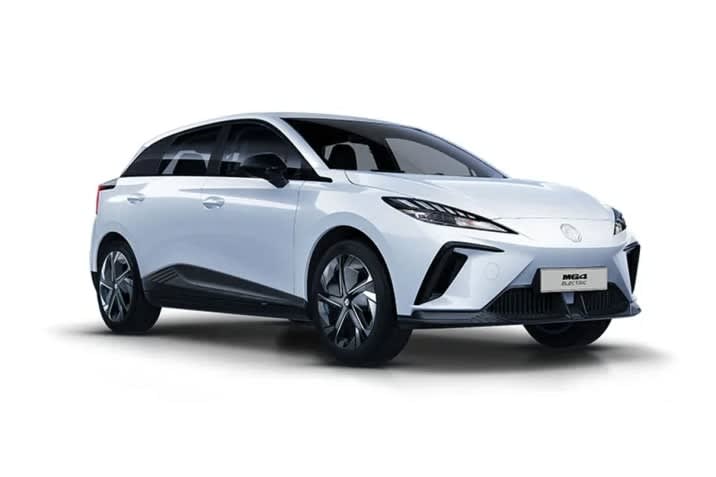
Battery Electric Vehicles

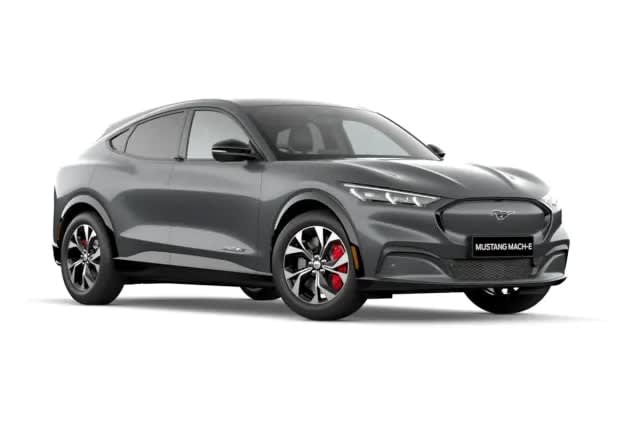
Plug-in Hybrid Electric Vehicles


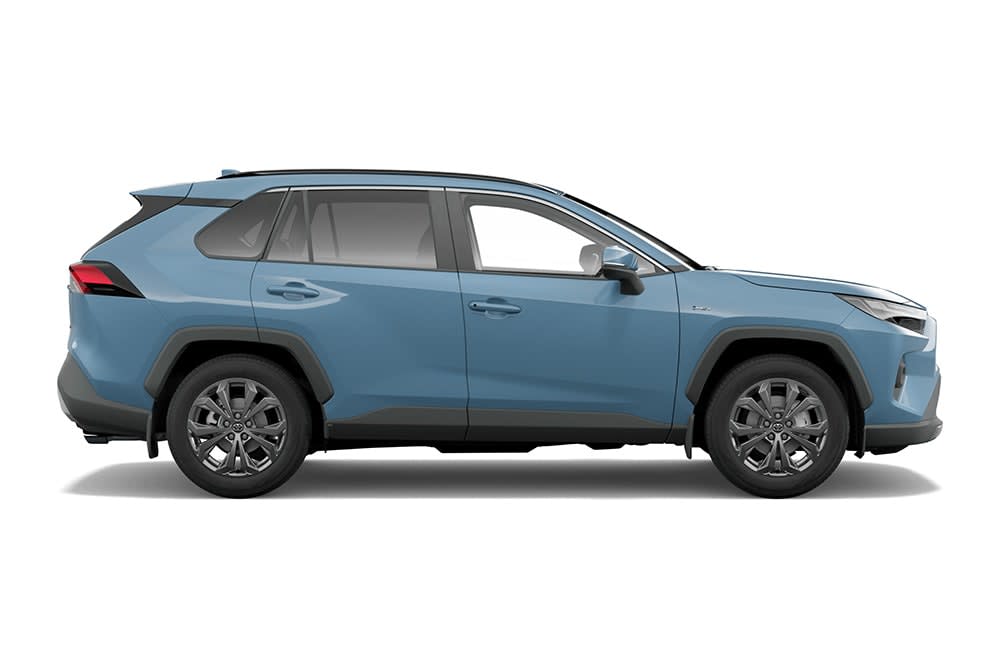
Hybrid Electric Vehicles


Browse our range of available EVs, PHEVs & Hybrids


Comparing battery types
Automakers promote their high-tech EV battery materials - but what do they actually mean? And, what's better?
| Feature | LiPo (Lithium-Ion Polymer) | NCM (Nickel Cobalt Iron) | NiMH (Nickel-Metal Hydride) | |
|---|---|---|---|---|
| Range | Moderate | Standard | ||
| Lifespan | +++ | +++ | ++ | |
| Weight | Heaviest | Moderate | Moderately Heavy | |
| Safety | Safe | Safe | ||
| Cost (Initial) | $$$$ | $$ | $$$$ | |
| Cost (Ongoing) | $$$$ | $$$ | ||
| Efficiency | Efficient | Efficient | ||
| Commonly used in | EV, PHEV | EV, PHEV, Hybrid | EV, PHEV | Hybrid |
| Featured in Car Makes | Kia, Ford, MG, Mazda, Mitsubishi & Jeep | Kia, MG & Chery | Kia, Toyota, MG, Ford & Jeep (Hybrids) |